

Monte Rosa has a way of getting under your skin, in the best possible way. After joining us for our hut-to-hut journey through this incredible corner of the Alps, one of our guests - Marek - puts his experience into words, and we loved reading it. He capture not just the landscapes, but the quieter impact of moving through big mountains day after day. We’re sharing his blog here (with thanks) and hope it offers a little inspiration for your own time outdoors.
Nine days, two countries, and ascent equal to the height of Everest — The Tour of Monte Rosa would be my first hike in the Alps and my first in a group. As trains whizzed me across Europe, I watched the landscape blur past while wondering how I’d cope with swapping my usual solitary freedom for a more structured, potentially school-trip-like experience. I’ve always been more cat than dog, happiest wandering at my own pace, stopping for birds or a swim whenever the mood takes me. Would walking with strangers suit me, or would it feel like I was wearing someone else’s boots?
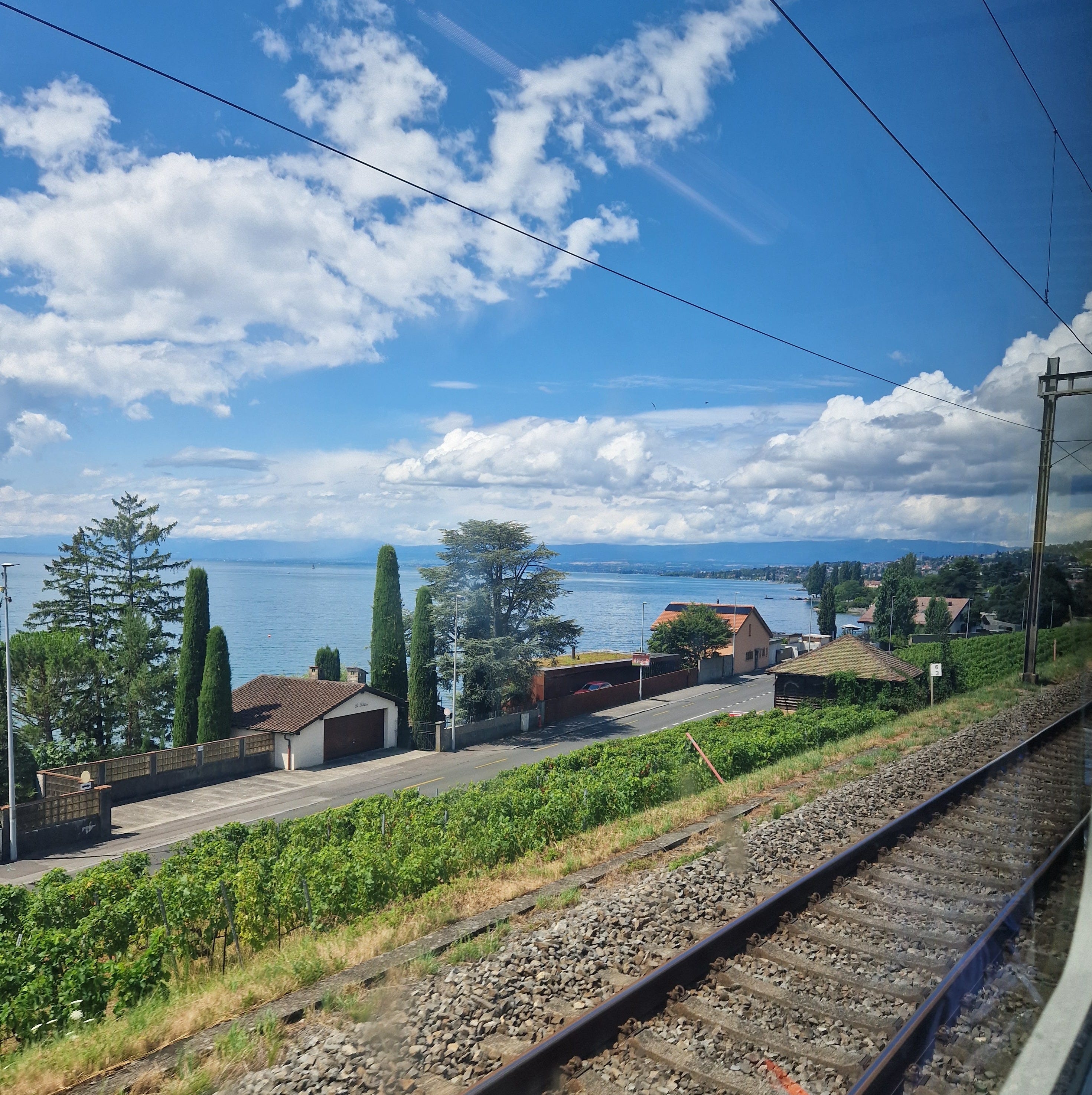
By the time I reached Switzerland, the WhatsApp group was already lively. People were posting their progress to the meeting point, and I tried to imagine their personalities. I risked sharing a picture of Lake Geneva: “Nice view from the train.” Marco replied, “I’m not far behind you — currently on the train as well.” Trying to break the ice, I wrote, “Feels like Race Across the World.” Ian shot back, “Who gets the last sandwich?”
I also worried about the pace. At 50, I was more concerned about slowing others down than running ahead, especially since the trip was graded “Expert”: up to nine hours and 5,900 feet of ascent per day. But I agreed with my wife that, if I wanted to hike safely in the Alps, joining a group was the sensible choice, as I had no previous alpine experience.
The Meeting
I arrived at our hotel in Saas‑Grund for the 5 p.m. meeting and found six hikers gathered in reception, all boots, poles and anticipation. To my relief, I wasn’t the oldest — that honour went to Linda from the US, quietly indomitable in her late 60s — followed by Émilie from Canada.
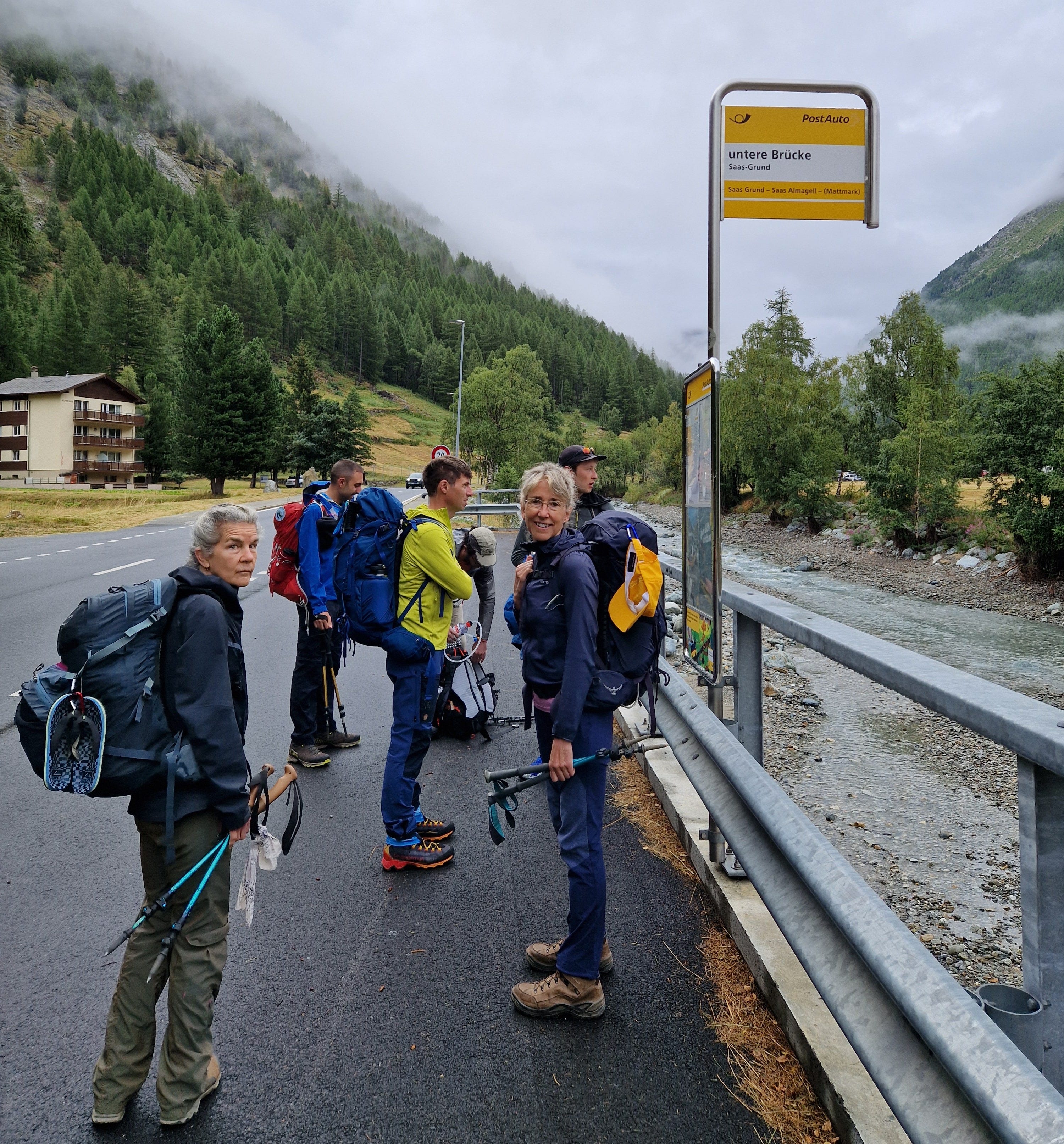
The others were younger: Marco, the calm watercolourist with fluent Italian; Dustin, the Bermuda-shorted group comedian and photographer; and fellow Brit and ultra-runner, Neil. As the taxidermied heads of local mammals looked down on us, our guide, Rhys, introduced himself. He was a mountain goat in human form — only in his late 20s, yet calm, confident, and already seasoned from summers spent living in his campervan and climbing half the Alps.
Dustin wasted no time establishing his role. After we received terrible service in one café, he announced, “Gee, he was a Grumpysaurus!” in a Kermit-like tone that echoed off the mountains. Similar quips followed all week.
Up and Down
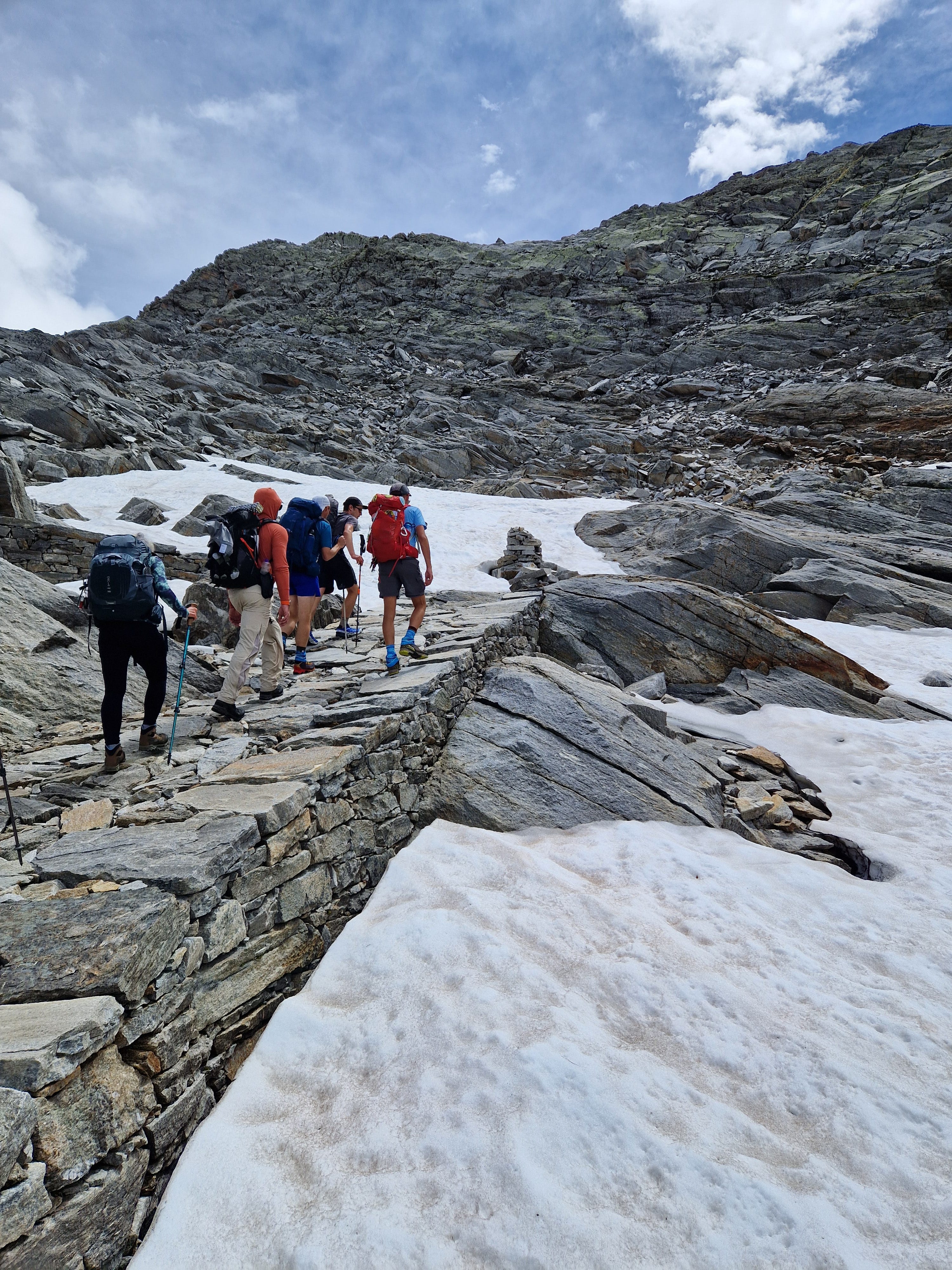
Despite running up every hill in Newcastle beforehand, nothing prepared me for the sheer relentlessness of the climbs and descents. I was grateful for my poles. The first few days in Italy followed a rhythm: early breakfast, then up through pine forests, across wildflower meadows, and over occasional snow patches to a high pass, before descending the other side. The descents were the worst — slippery paths, jarred legs, and the occasional undignified slide.
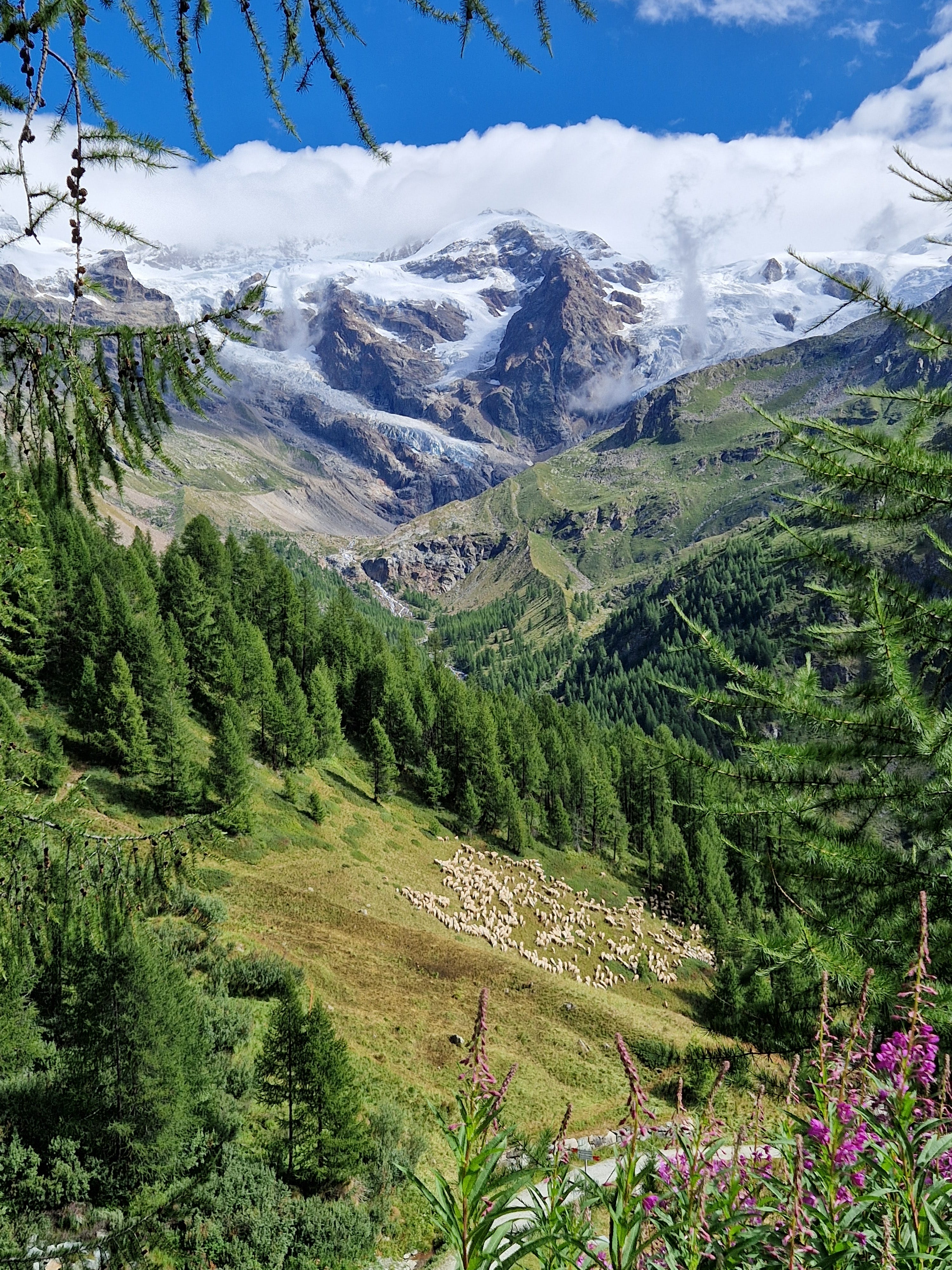
The scenery was a constant reward: snowcapped peaks, retreating glaciers, alpine lakes, and villages borrowed from the set of The Sound of Music. We often climbed to a symphony of cowbells. Electric-blue gentians, star-shaped edelweiss, and the shaggy seed heads of Pasque flowers graced the meadows. We spotted the majestic horns of ibex breaking the skyline, marmots darting for cover, and clouds of butterflies – compared to some parts of the Lake District, there was a cornucopia of wildlife.
Majestic Mountains
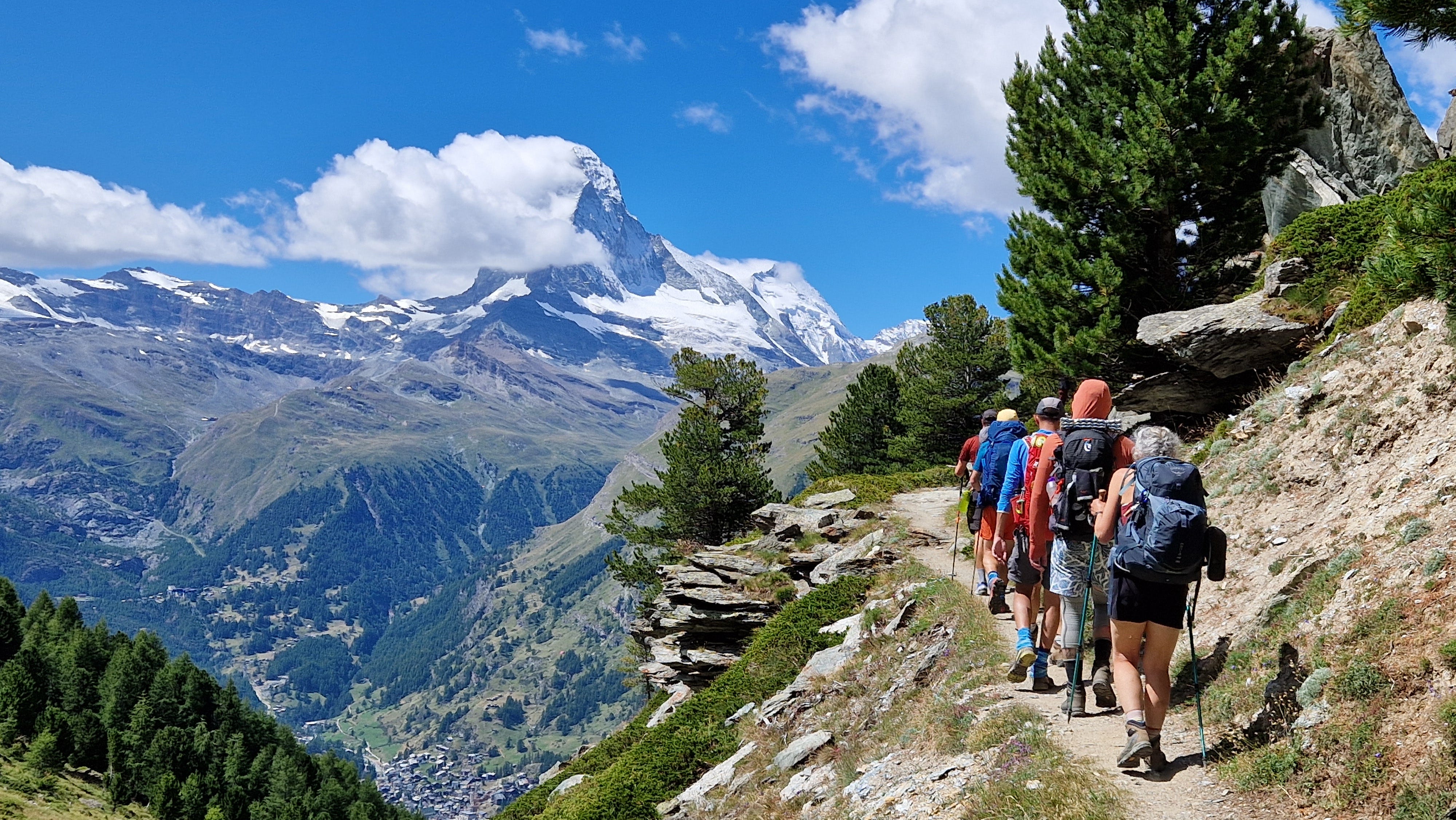
The scenery was consistently stunning, but day six delivered the showstopper. As we crested a hill, the Matterhorn suddenly appeared, thrusting skyward and instantly recognisable. Even though we were already at 10,000 feet, it towered above us.
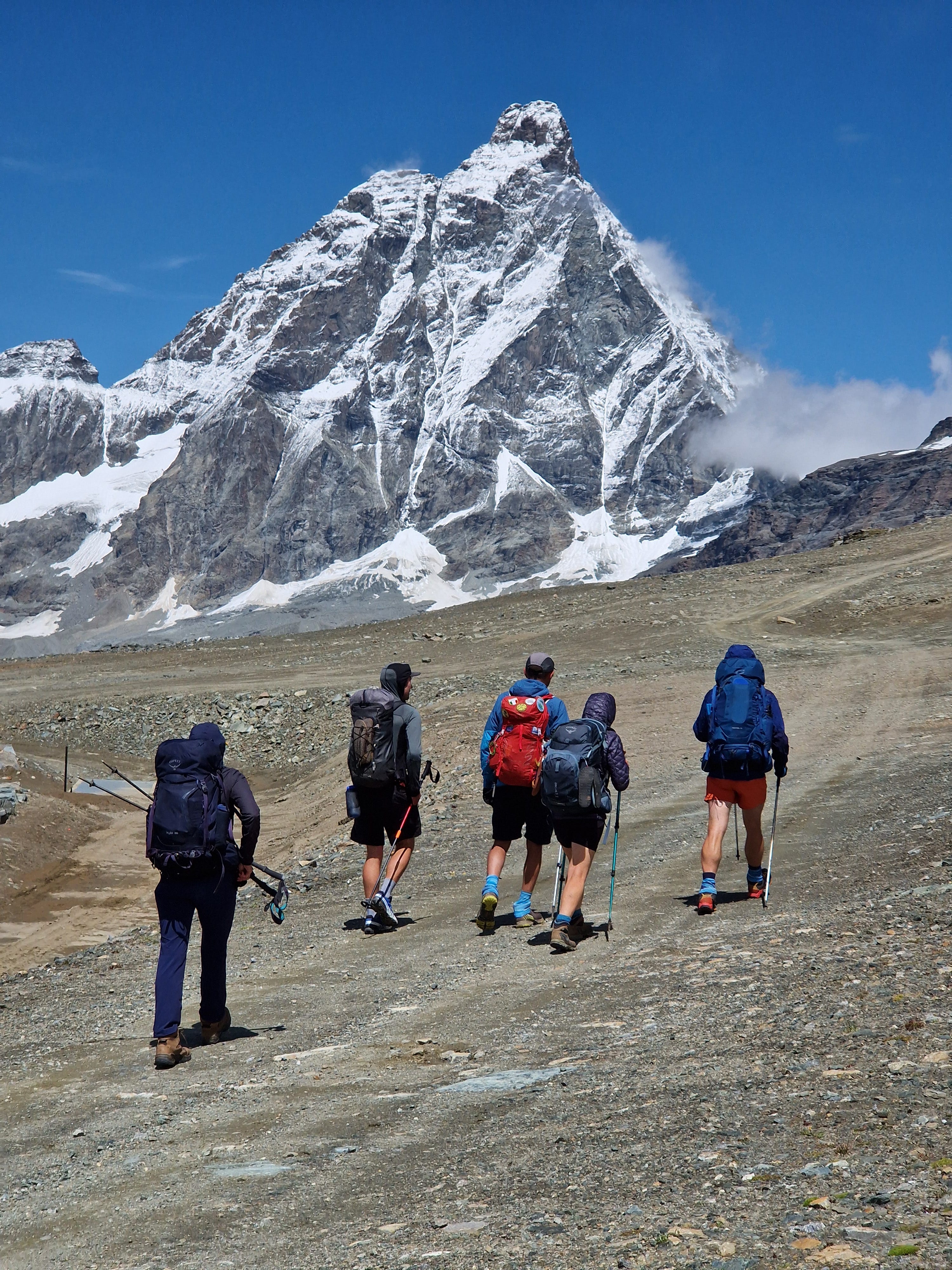
We tore our eyes away long enough to make the final ascent to the Refugio Teodulo, our highest lodging. The following morning’s sunrise over the glacier looked like a scene from Where Eagles Dare.
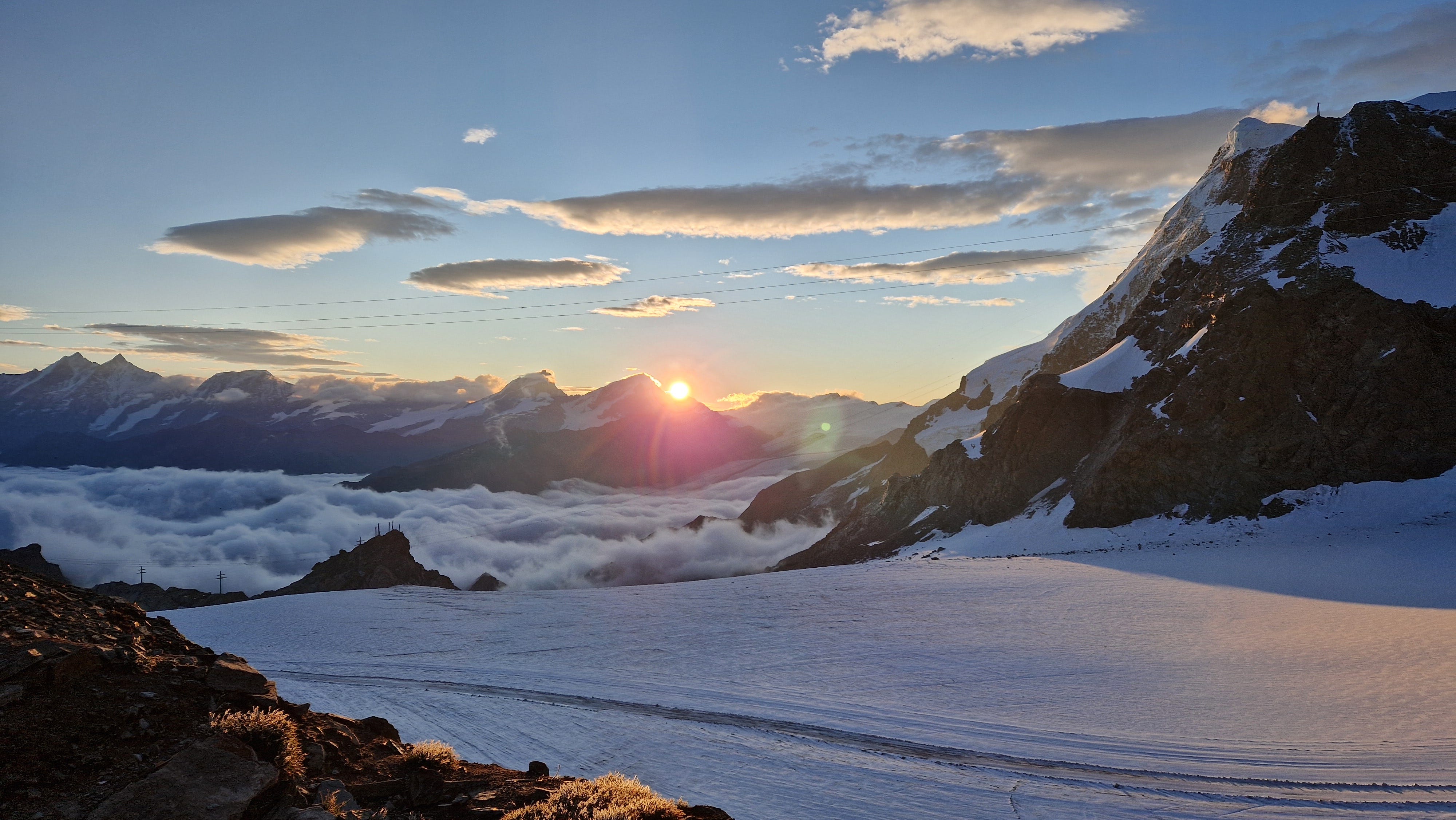
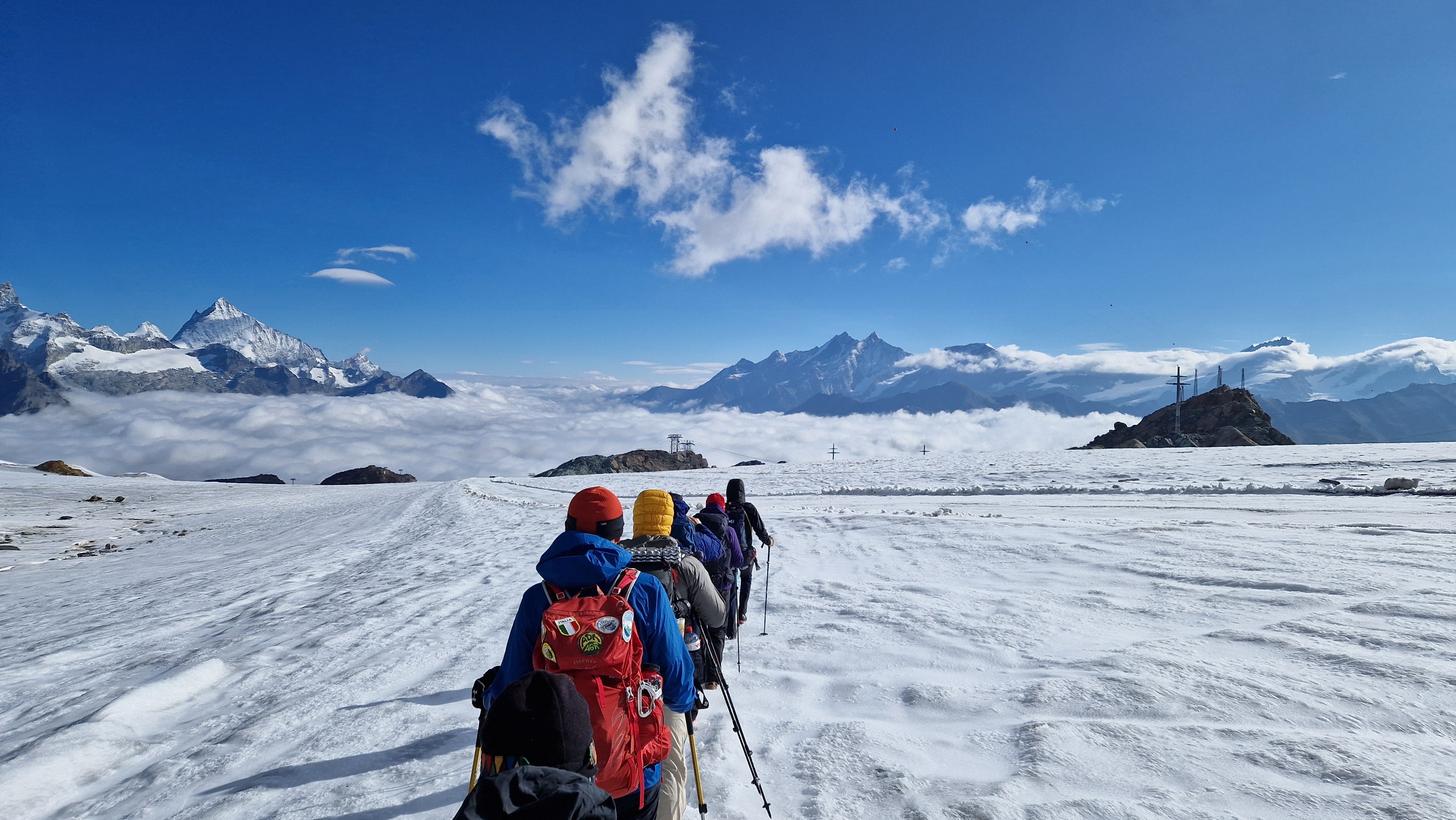
The next morning, roped together, we made a short glacier crossing to a cable car station. It wasn’t technically difficult — mostly along a ski piste — but we did pass one potential hazard: a crevasse through which turquoise meltwater canyoned before gurgling into the depths. From the glacier, we finally saw the massif of Monte Rosa itself, a crown of peaks with formidable names like Breithorn, Strahlhorn and Dufourspitz. Rhys spoke with passion about these summits, including one time when he and his climbing partner were rescued by helicopter after spending the night stranded on an ice shelf with only one sleeping bag between them.
Mountain Huts
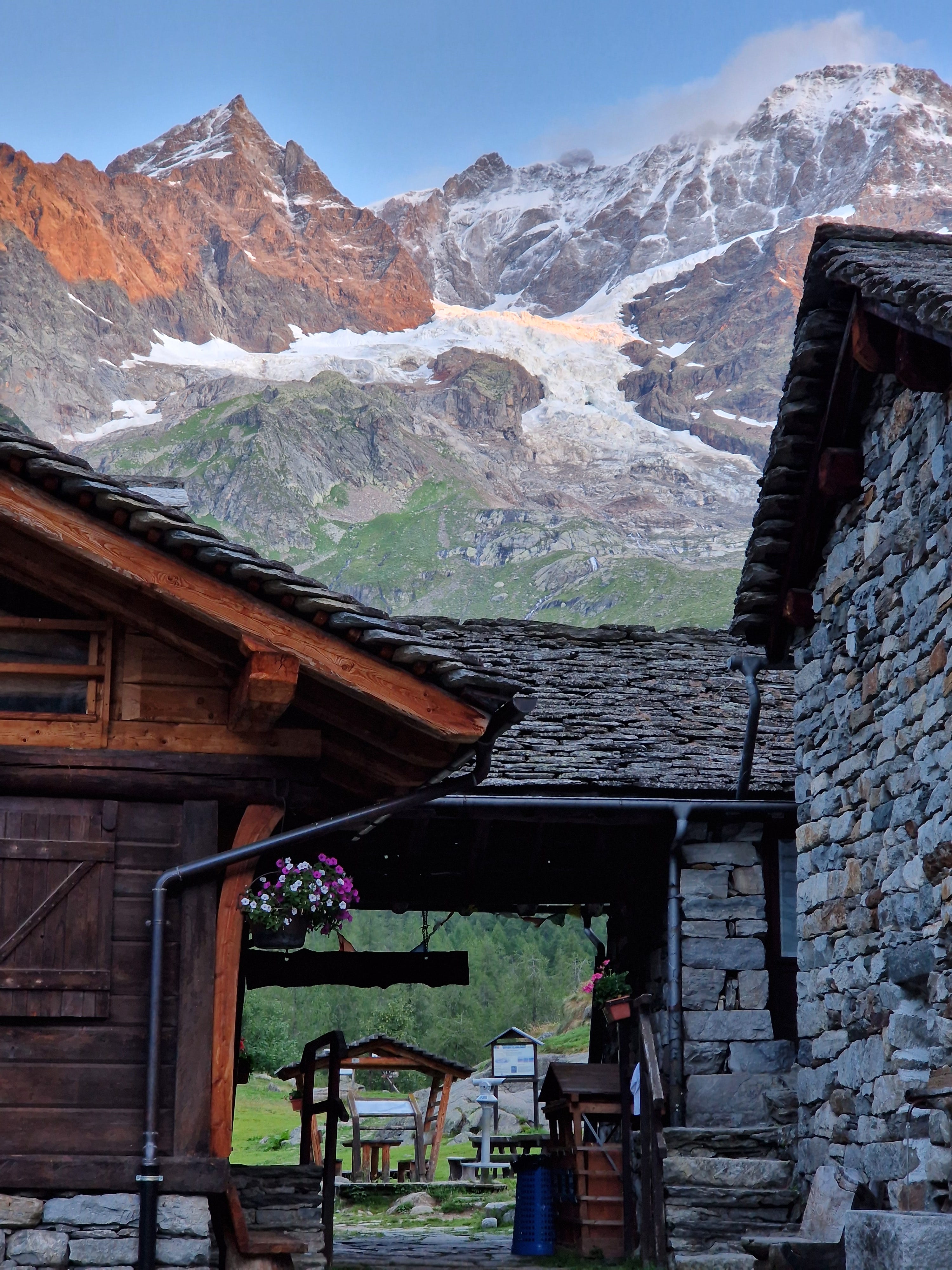
Mountain huts are a quintessential part of the alpine experience, as camping isn’t popular, perhaps because of the rocky terrain and sharp ascents. Still, squeezing into a tiny bunk room with six companions and damp clothes is a unique lesson in diplomacy. By evening, my social batteries were drained, and I had little energy left for dinner-time banter. I would have happily curled up with my Kindle. One night, I felt like Dustin’s Grumpysaurus as I climbed into a top bunk so close to the ceiling I dared not sit up for fear of bashing my head. The lack of a safety rail and negotiating the rickety stepladder for a midnight toilet trip added to the jeopardy.
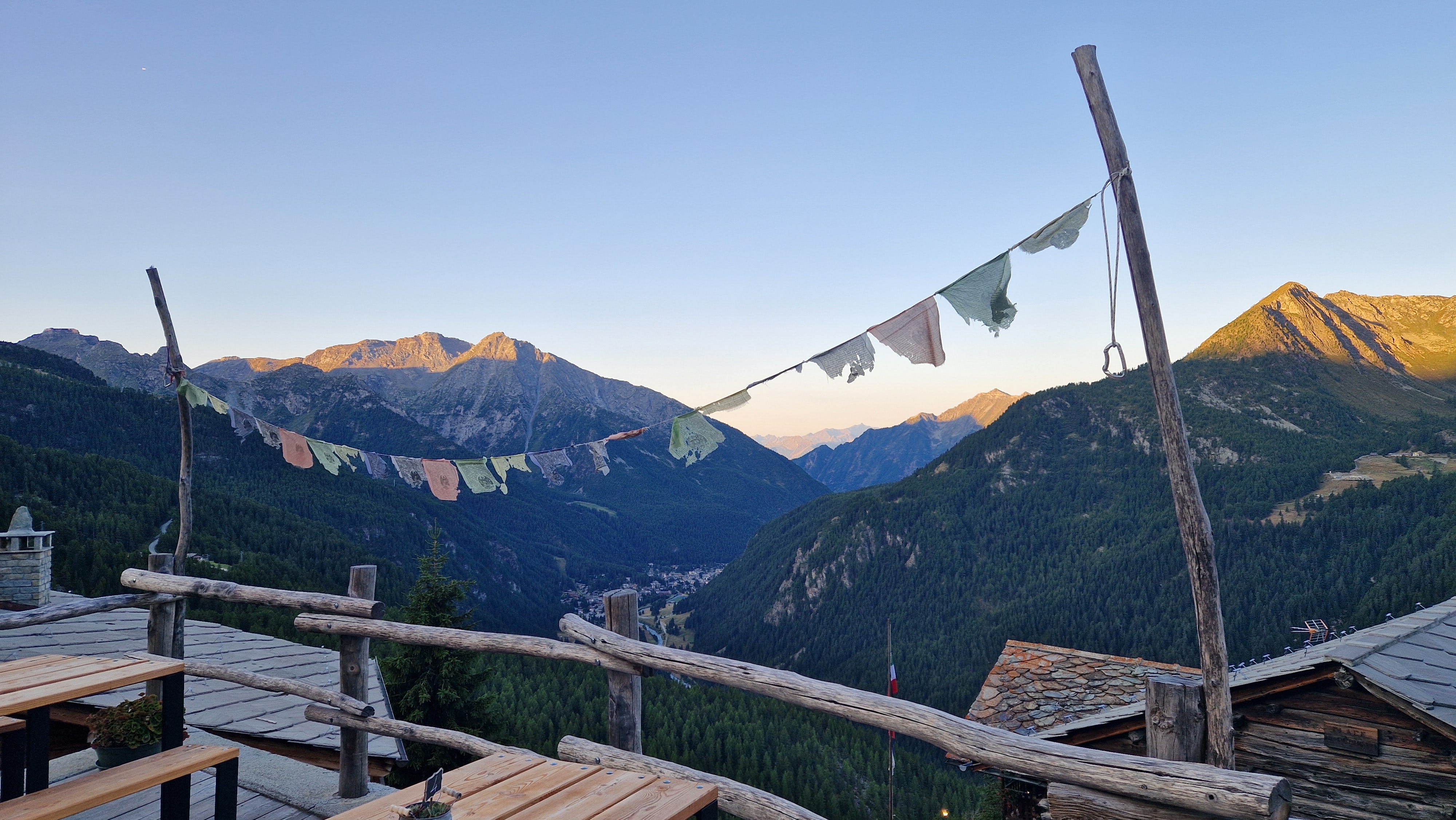
But the huts themselves were often spectacularly located, miles from anywhere, serving hearty dinners and light breakfasts. Arriving mid-afternoon allowed time to myself: after coffee and cake, Marco painted, I looked for wildlife, and others rested.
Group Dynamics
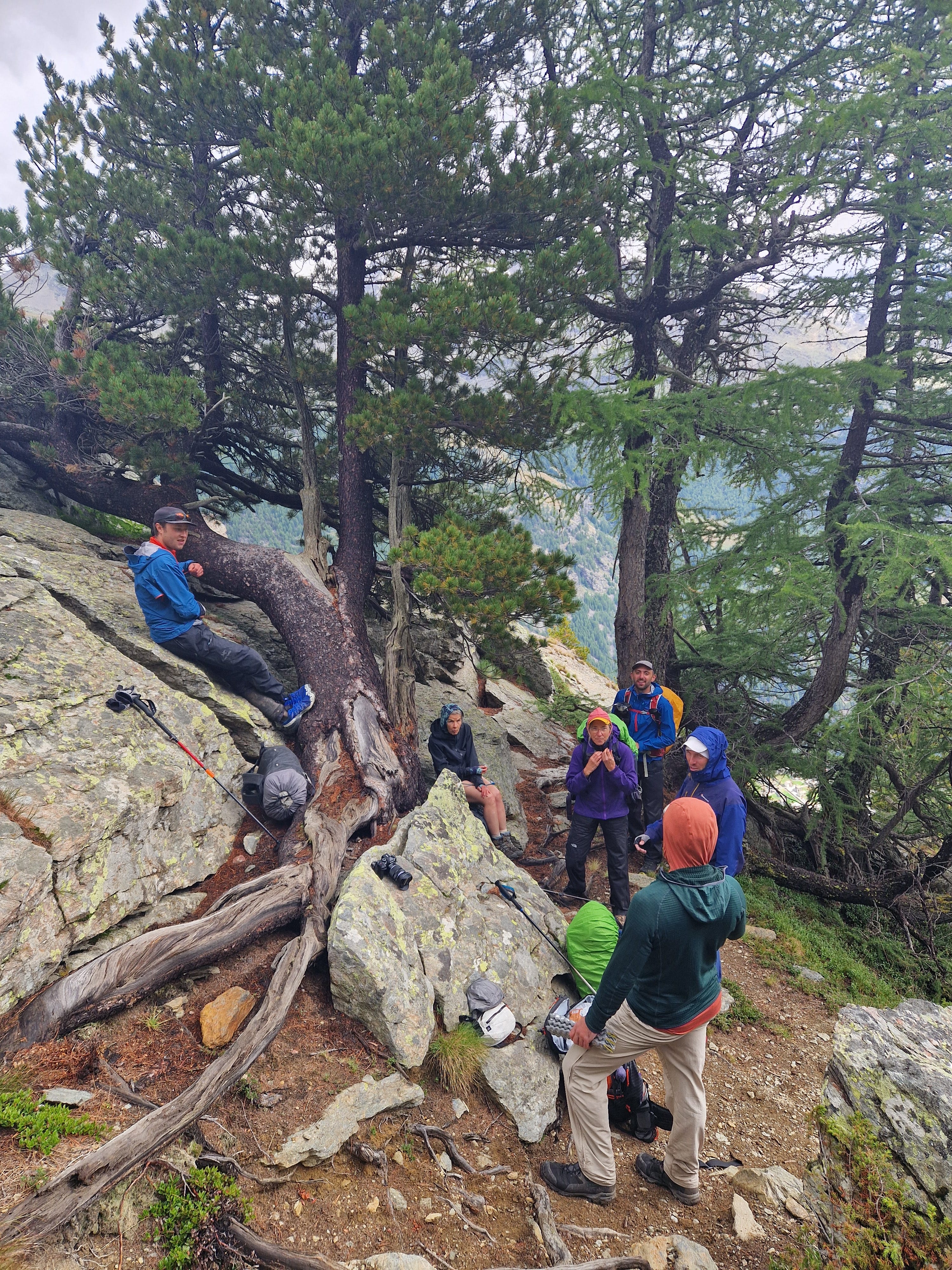
Our group gelled well. No one powered ahead or lagged behind, despite the age range. We naturally rotated walking partners or drifted into companionable silence. If someone needed water, a blister plaster or power adaptor, help was offered. After hundreds of miles of solo walking, the camaraderie was refreshing and helped pass the time.
Rhys taught us about the best navigation and weather apps to use in the Alps, pointed out landscape features, and showed us where to find water. Dustin shared stunning photos from his SLR camera; Marco handled Italian conversations; others swapped ideas for future adventures. I became the go-to person for bird identification.
But, of course, walking in a group required compromise. We took a few cable cars to shorten what would otherwise have been long days; to me, this slightly detracted from the achievement. If I were on my own, I would have just arrived later. But I didn’t voice my objections, not wanting to ski off piste. Also, I often wanted to linger to look for wildlife, and Dustin sometimes got behind taking photos, but Rhys kept us moving to schedule. His strict “five-minute breaks” became a running joke: scrambles to have a snack, fill water bottles, reapply sunscreen and find an inconspicuous place to have a wee. I managed a quick dip in a meltwater lake one lunchtime, but there was no time for a catnap.
Whatever the pros and cons of walking in a group, when we had an afternoon off in Zermatt, I slipped away to explore the peaceful Gletschergarten, or glacier garden. As my mind and pace slowed, I saw my only chamois of the trip grazing by the path, watched a nutcracker forage in the pines, and caught the silhouette of a rare Lammergeier drifting overhead. That solitude felt like home – a place where I could recharge.
The Balcony Path
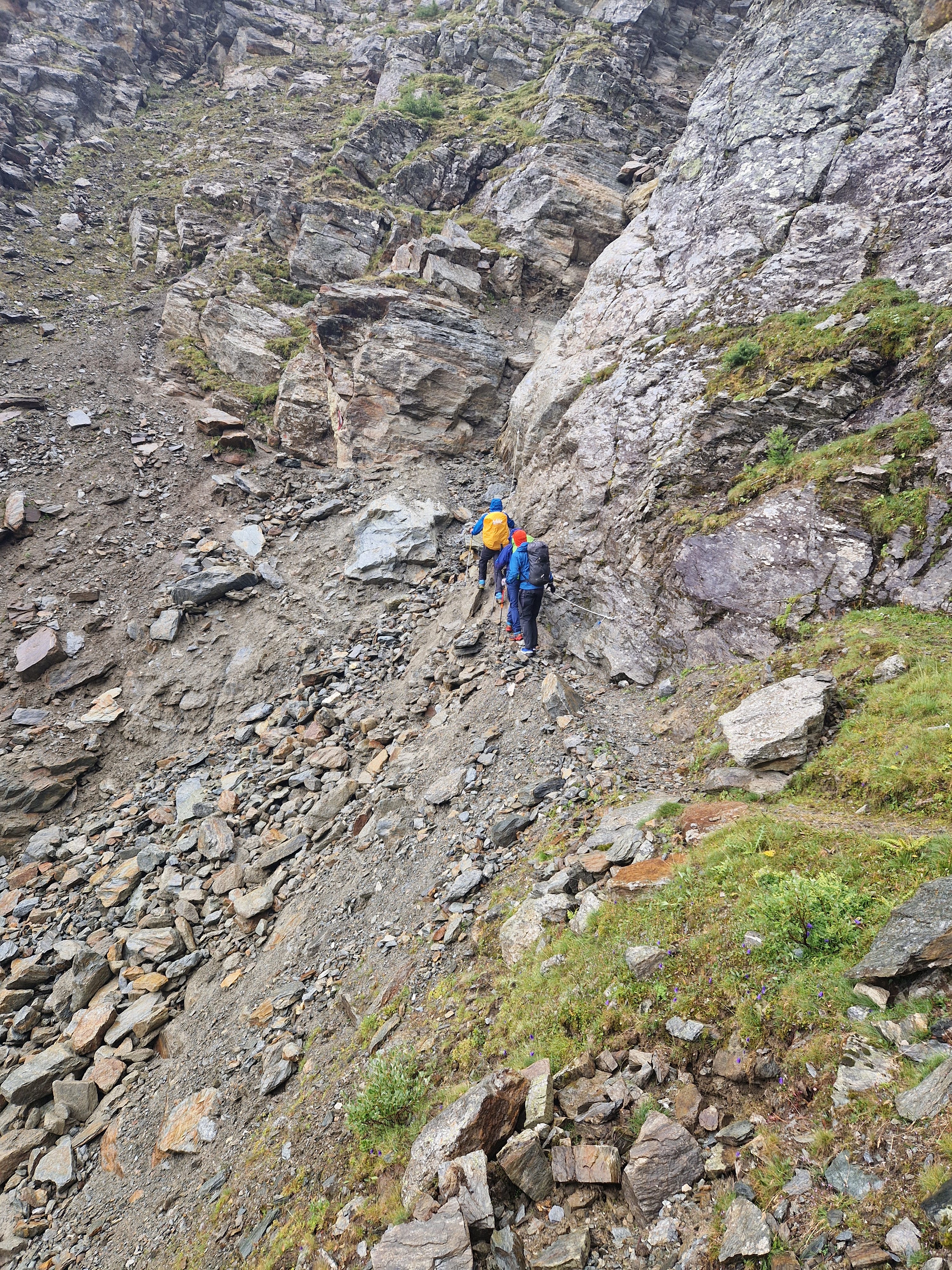
Our final day was one of the most dramatic and occasionally traumatic, as I have a fear of heights, or at least precipitous edges. The Höhenweg balcony path from Grächen to Saas‑Grund was mostly flat but ran for miles with a cliff to the right and a sheer drop to the left. The views were magnificent, but total concentration was required. At times, we ducked under low rocks while gripping the all-too-infrequent metal rope. Where rockfalls had destroyed the path, Rhys guided us across, assisting at the trickiest points.
Eventually, a tiny village appeared in the valley below, which turned out to be Saas Grund, where we had started nine days before.
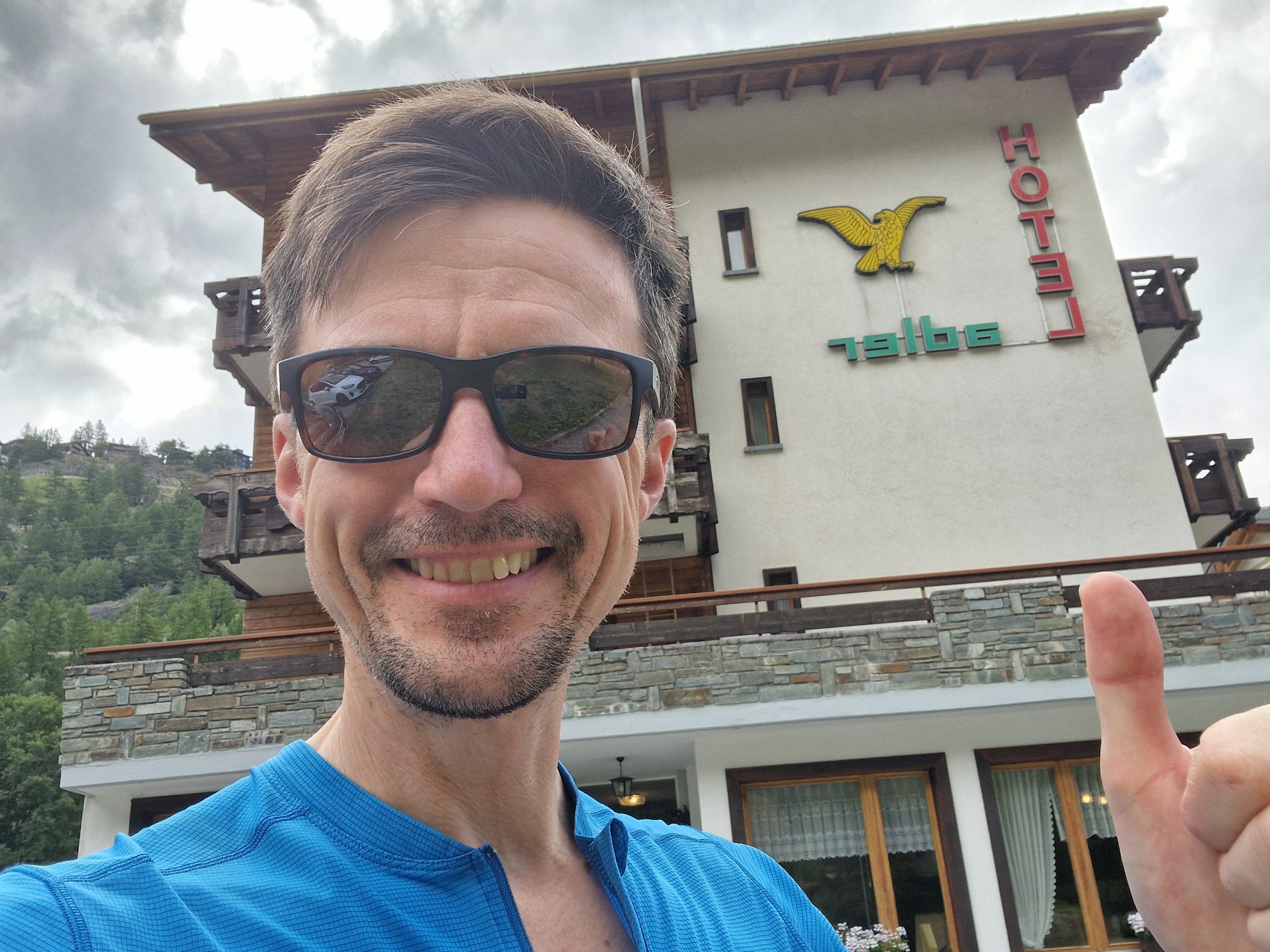
We reached the Hotel Adler with collective relief and celebrated our final meal together.
Reflections
Five months on, and looking back, I’m still awed by the experience. Much of the route felt genuinely wild and far from civilisation. We didn’t summit anything, but I had my fill of epic mountain days and shared them with a small, supportive group. I did enjoy walking with others — the shared jokes, the mutual support — but I simultaneously missed the freedom of planning my own route, the challenge of navigating, and quietly observing nature.
I think of a good walk as a hiking sandwich wrapped in planning and reflection. For me, this trip felt a bit like the filling without the roll. Still, I couldn’t have done it on my own and learned new skills. You rarely read about such experiences in hiking magazines because editors tend to feature more dramatic self-guided adventures, which might leave the impression that group hikes are somehow inferior. However, this gateway industry is the only way many of us walkers can push the boundaries of our hobby to new places, which is why I thought I’d reflect on my experience here.
I hope to return to the Alps one day. The epic GR5 from Lake Geneva to Nice is high on my list if I can find a hiking partner. But for now, I’ll continue my episodic LEJOG adventure across the UK, where I can be as cat-like as I please.
End Notes:
Names of group members have been changed.
We started in Saas-Grund and walked clockwise.
Parts of the trail between Zermatt and Grachen, called the Europaweg, were closed due to rockfalls, so we had to take a detour from the standard route.
This walk took place in July 2025 with Tracks & Trails. I recommend their service; they were both professional and personable: See Tour of Monte Rosa
Marek Bidwell is an environmental consultant and author of Skye Line: Backpacking the Original Skye Trail”